
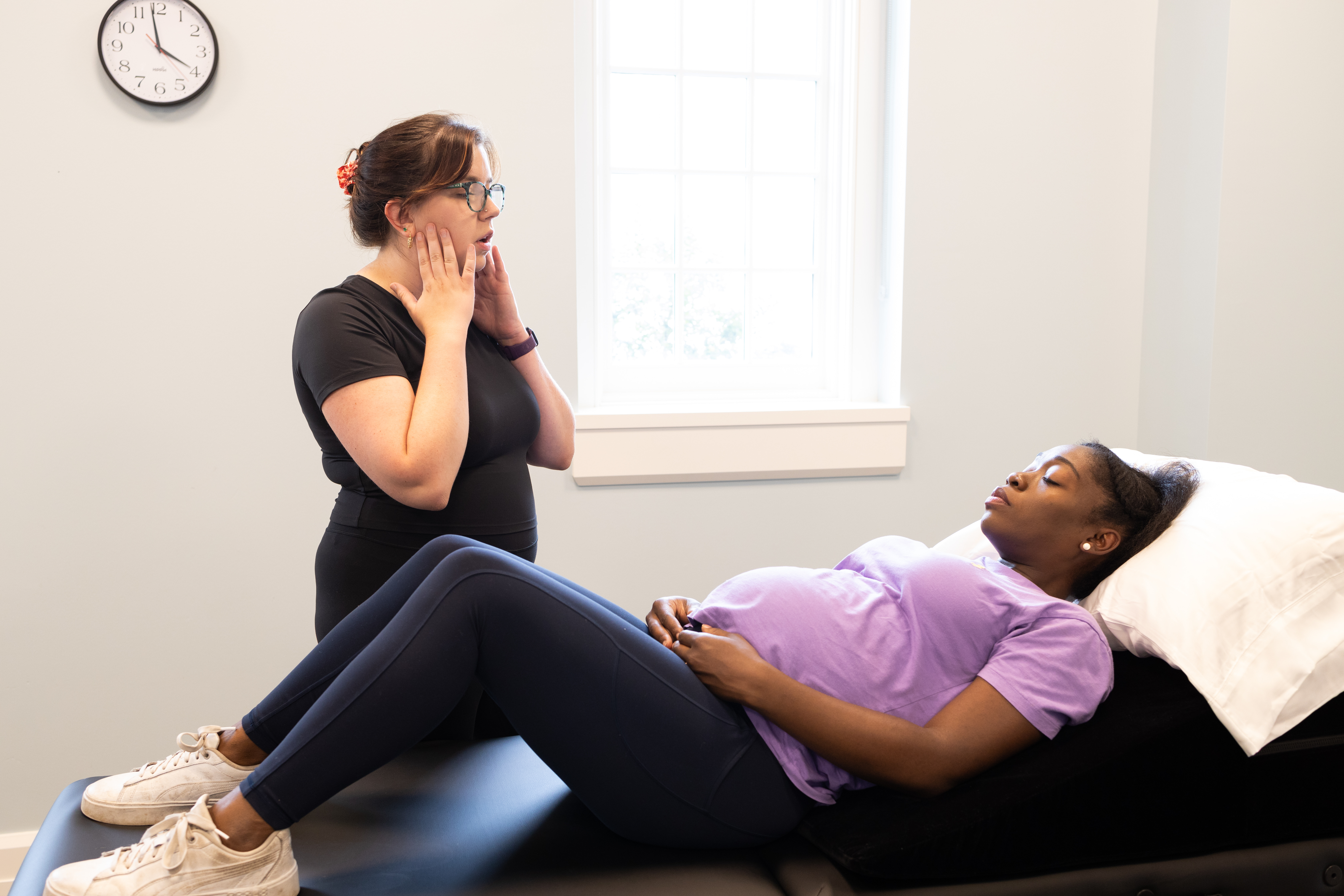
Happy PT month! I hope you wish the PTs in your life a great month and thank them for what they do!
If you think of PT, what do you think of? Probably laying on a table, having someone rub your back and then make you do a series of strengthening/stretching exercises. It is that. But it’s also more.
I spend a lot of my day talking to people about their nervous systems. Part of this comes with the territory. I often see people with chronic conditions like chronic low back pain, endometriosis, bladder pain, etc, where the nervous system is often a key player in someone’s pain.
Sometimes an injury is just an injury. You fall, you break your arm. It heals, you rehab, badda bing, badda boom. You’re back to normal.
Other times it becomes a more chronic issue. You get an endometriosis or interstitial cystitis diagnosis. Your back starts bothering you every year around the same time. That arm break actually turns into a chronic pain syndrome.
Often times, people are hesitant or give me a questioning look when I ask them about the state of their sleep, their nutrition, or their inter-personal relationships. I understand why – they think in their heads, what does that have to do with my pain?? Well, the North American Spine Society came up with this web to demonstrate all of the things that contribute to the sensation of pain (bigger = more impact, smaller = less) in people with low back pain.

A lot of these factors we can see represented in pelvic floor conditions, as well as in chronic pain in other areas of the body.
I think most of us know these factors can affect our pain on a subconscious level, but we never full realize how much until we start tracking things like stress, sleep, alcohol consumption, etc, with our physical symptoms.
Let me give you an example. A few years ago, I woke up 2 days before Christmas with my usual bladder pain flare symptoms: urethra on fire, tension throughout my low back and hips, feeling like I had to pee every 5 minutes, pressure in my lower abdomen, feeling like my bladder was ripping when I did go to void, and severe urgency without any urine output.
I couldn’t figure out why my body chose that moment. Upon reflection, I realized my stress was through the roof, I wasn’t sleeping well, I was regularly getting up for early workouts, not eating sufficiently, and I probably had a few days in a row of drinking less than 40 ounces of water.
This was before I fully understood my triggers. Here’s what I know contribute to my symptoms today:
- If I go a few days with very interrupted sleep, or stay up too late/wake up too early
- If my stress level is anything over an 8 and I spend more time dissociating or getting out of my usual habits
- If I am not meeting my body’s nutritional demands and/or eating at regular intervals throughout the day
- If I do a really ab heavy pilates/barre/strength workout, workout my hamstrings or inner thighs too hard, or ride my bike for too long
- If I miss my water intake minimums for more than 2 days
The biggest contributing factor for me is SLEEP. If I have 2 days of messed up sleep in a week, it is pretty likely that I will have symptoms at some point that week. Add in stress and that makes it almost certain. Mix a couple of them together and it’s even more likely and I know that I am going to have those symptoms last for more than a day.
The big question is: WHY.
The answer: go back to that web.
Your body is an ecosystem. Your nervous system is integrated with your body. They cannot be separated. Things need to be in some kind of balance in order for you to get through the day symptom free. If your brain has a lot going on, that is likely to be manifested in your body in some way.
In my body, the common culprit when there has been an issue in the past has been my bladder. For you, that may be your abdomen in general, your low back, your hip, your neck, etc. The brain has been wired to check that spot first. Make sure there’s not an active problem there.
I could treat my bladder all day. That will probably help it get better. But it will continue to frustrate me when my symptoms come and go if I don’t know what triggers it. It is more helpful for me to learn my triggers and know what to do when the problem arises.
The same goes for you. When your nervous system is nervous, what do you do? Do you spiral and lament that things will never get better? Or do you say to yourself, I have tools in my toolbox, let’s start implementing those.
PT is more than just exercise. It’s symptom management (and maybe even eradication) so that you can stay active and participate in life. It is the job of a good provider to help you learn your triggers and find the right tools so that you can implement them when you’re not seeing them. And be there for you when you need a little more help.
-Naomi


Leave a Reply