
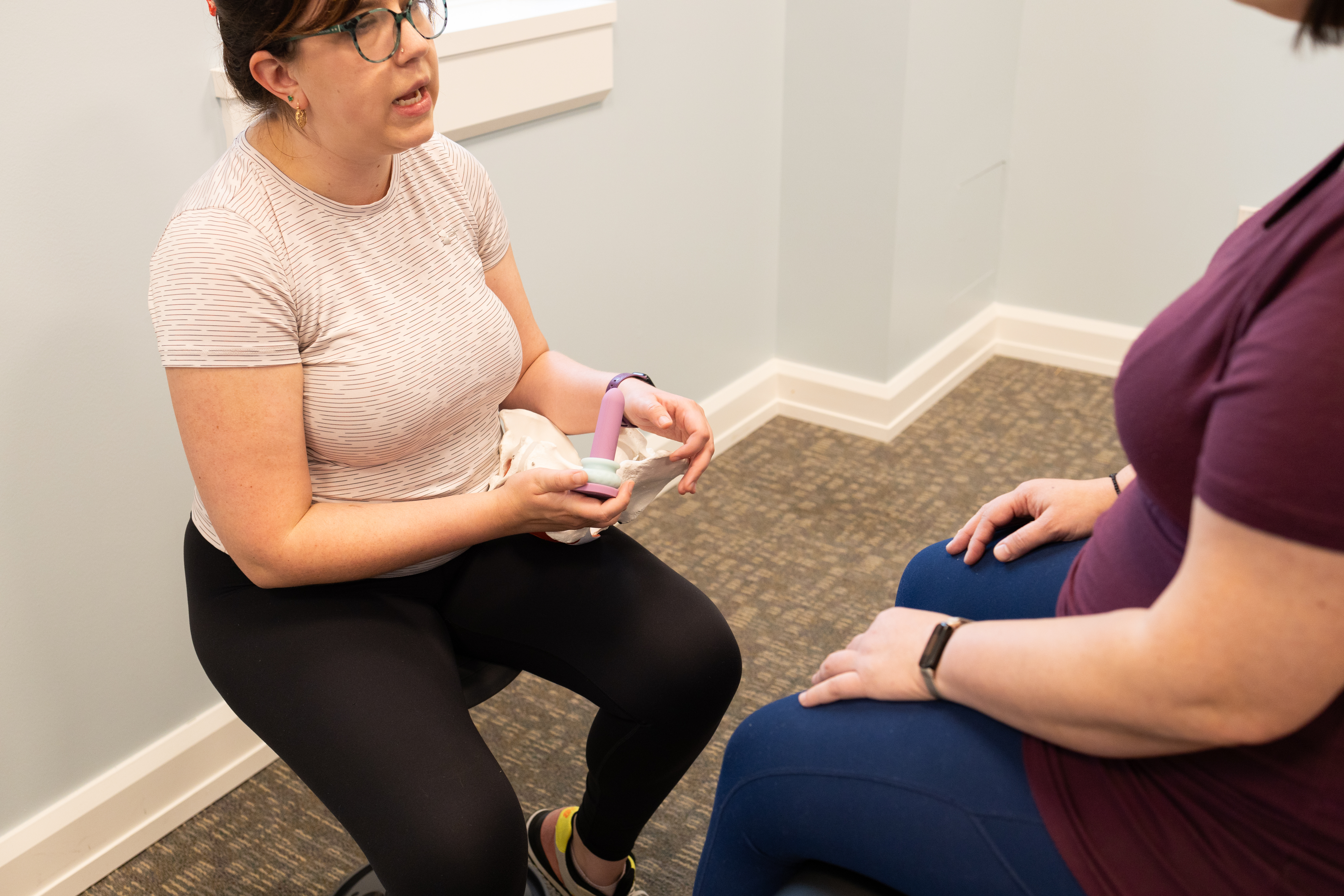
For the last month we have discussed Genitourinary syndrome of menopause. We’ve covered signs and symptoms, how to do a good self exam, and why estrogen changes lead to these symptoms.
The other element that we have to keep in mind is the pelvic floor. With the narrowing and shortening of the vagina we discussed in the previous post, if someone has penetrative sex and it is painful, often times the next time that person is anticipating penetration, their pelvic floor can tense up because they expect pain. Well guess what – that tension makes gives the brain that confirmation bias it’s seeking.
The pelvic floor’s job is to close all of your sphincters off – including the vagina! The pelvic floor tensing/guarding response in anticipation of pain, is only going to make that pain worse.
As the pelvic floor starts to reach a more hypertonic state (aka more closed off) more consistently, it becomes less coordinated.
This can affect another element of GSM – urinary incontinence. If your pelvic floor is supposed to function like a trampoline, responding to increases in pressure with subtle or strong contractions (depending on the severity of the change) and instead it becomes more stiff, it will not be as responsive when a cough, sneeze, or hard laugh happens. This makes it even more difficult to prevent leakage in those situations.
Pelvic floor PT’s role is to help improve the pelvic floor’s mobility, making it less stiff and more coordinated in order to get you back to the things you enjoy: intimacy with your partner, laughing with friends, or getting through cold and flu season without having to buy out the store’s pad supply.
Sound like you? Email me to get set up with an evaluation today!
-Naomi
Leave a Reply